MENUCLOSE


Connect with us

Author: Brian S McGowan, PhD

The Earliest Warning Sign: How Measuring Readiness at Training Predicts Trial Risk Before It Shows Up in the Data

Most protocol deviations start as human problems, not operational ones, but risk-based monitoring typically relies on lagging indicators that arrive too late to prevent these problems instead of measuring readiness during training, when intervention still matters.

in Applied Clinical Trials

Volume 35, Issue 2: 4-01-2026

“Readiness, measured during training at site start-up, is one of the few leading indicators that is both measurable and actionable with meaningful lead time. Used well, readiness does not simply inform monitoring intensity; it helps shape how quality is built into site activation and early execution.”

Most problems in clinical trials don’t begin as operational problems. They begin as human problems. A protocol deviation rarely starts with defiance. It starts with ambiguity, a rushed choice, a misunderstood step, an assumption that feels reasonable or confidence that has outpaced competence. Those moments compound. And by the time the numbers signal trouble, the real cause is often weeks or months old.

This is an uncomfortable truth for a field that loves dashboards. We measure what is visible, what is countable, what fits neatly into a report. But the roots of human performance are not always immediately visible, and are rarely neat. People manage complexity with mental shortcuts. They conserve effort under pressure. They overestimate what they understand when things feel familiar. They default to habit when workflows are crowded. None of this is a character flaw. It’s the human condition, how our brains cope with too much information and too little time. We’ve explored many of these patterns in our prior 19 Applied Clinical Trials columns.

Given these lessons, we now know that many of the most critical risks in clinical research are (thankfully) often predictable. Not because we can forecast every operational twist, but because the cognitive and behavioral conditions that produce these risks are remarkably consistent. The real question is whether we choose to measure early enough, when we can still do something about it, or later, when the best we can do is document and react.

Risk-based monitoring’s blind spot: Signals that arrive too late

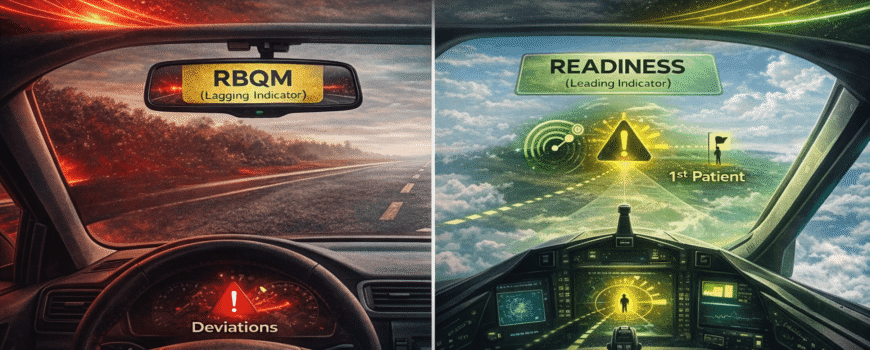
Risk-based monitoring (RBM) was supposed to be the industry’s answer to this dilemma. Focus on what matters most, reduce waste, and use signals to guide attention. In principle, RBM is a behavioral strategy: It shapes the system, so people invest effort where it produces the greatest return. In practice, though, many RBM programs still function like rearview mirrors.

They rely on lagging indicators, metrics that confirm trouble after it has already arrived: rising query volumes, delayed data entry, accumulating eligibility or dosing deviations, safety reporting delays or recurring documentation findings identified during monitoring visits. Eligibility deviations, for example, may only surface once monitors review source documents and find that multiple subjects were enrolled under slightly different interpretations of the same inclusion criterion. These measures are valuable, but they are lagging and descriptive. They tell you what happened.

Leading indicators do something different. They do not measure outcomes. They measure the conditions that make outcomes likely. They provide early signals that enable prevention rather than the costly cleanup. And prevention matters because in clinical trials, time is not a luxury. It is the currency.

This brings us to a curious blind spot. One of the most valuable windows into human performance appears before the first patient is enrolled: during site start-up and training. Yet we often treat training as a simple administrative “to-do” item. Content is delivered. Attendance is recorded. Completion is tracked. A box is checked. Everyone feels a brief relief that something is “done,” even though little has been achieved beyond compliance.

Our brains love this kind of closure. Completion feels like progress. A certificate feels like competence. Familiarity feels like mastery. We confuse exposure with ability. We mistake recognition for recall and recall for performance. We see a passing quiz score and assume people can execute under pressure. We assume that because someone nodded through training, they will perform flawlessly when the first subject arrives, the clinic is busy and their judgment matters more than memory. That gap often surfaces during the first real patient interaction, when the site must interpret the protocol without slides or instructors. It shows up when the site calls the CRA during its first screening visit to confirm basic eligibility criteria.

If the only “signal” we capture at training is completion, then RBM has no choice but to wait for lagging indicators to emerge. The result is a system designed to detect consequences rather than the conditions that produce them.

Readiness: A leading indicator with a runway

Readiness changes that. Readiness can be measured during training in ways that reflect real performance, not exposure. It captures what people know, what they can do and whether their confidence is calibrated to competence. It can also include mindset signals that predict execution when things get messy: curiosity, self-regulation, intention, grit and reflection. These aren’t “soft traits.” They predict whether someone will seek clarity, monitor their own understanding and persist through inevitable friction. In clinical research, those behaviors are often the difference between a minor hiccup and a downstream cascade. Sites that struggle to demonstrate mastery and readiness during training are predictably the same sites that generate early clarification emails, dosing questions and preventable protocol deviations.

The simplest point is the most powerful: If readiness is measurable during training, it’s a leading indicator of risk. It exists weeks or months before enrollment. That timing matters because it creates what trials rarely have: a runway for response. Intervening here can mean the difference between weeks of corrective monitoring versus a smooth first patient in.

Lagging indicators tell you that a site is producing deviations. Leading indicators tell you that a site is likely to produce deviations unless you intervene. Those two statements are worlds apart. The first triggers monitoring and correction. The second enables prevention. And prevention is the true promise of RBM.

Once you embrace readiness as a legitimate risk signal, the operational implications become straightforward. The readiness distribution across sites becomes a risk map before enrollment begins. Instead of reacting to early deviations, trial teams can prioritize support for the sites most likely to struggle with their first subjects. High-readiness sites become opportunities for early momentum, faster activation and a cleaner first patient experience. Mid-readiness sites become targets for precise, time-limited support that prevents predictable mistakes. Low-readiness sites become candidates for remediation before activation, or for activation with heavier enablement and tighter early oversight. The goal is not to label sites. The goal is to allocate resources more efficiently, when they still matter.

This also reframes an uncomfortable reality that experienced trial teams know but rarely say plainly: Not all sites are equally ready post-activation, and treating them as if they are is not “fair” — it is inefficient. Fairness in clinical research should mean giving each site what it needs to succeed, not giving each site the same level of attention regardless of risk. Readiness allows you to do that ethically and effectively because it shifts the decision from opinion to evidence.

There is a deeper benefit here, one that sits squarely in the human factors theme of this series. Readiness doesn’t just predict errors; it predicts how people respond to uncertainty. When readiness is low, the brain compensates in predictable ways: It fills gaps with assumptions, over-relies on habit, avoids effortful reasoning, delays asking questions and mistakes familiarity for understanding. Those are default behaviors under cognitive load. Measuring readiness early is one way to measure cognitive load before it expresses itself as operational noise.

If we want RBM to be more than smarter surveillance, we should stop waiting for the trial to tell us it is struggling. By the time problems surface in monitoring metrics, variability in protocol execution or documentation may already be taking hold. We should look earlier, when the human factors are signaling risk in plain sight. Training completion is a bureaucratic milestone. Readiness is a prediction, and it is one of the earliest measurable indicators of how consistently a site is likely to execute the protocol once real patients and real time pressures enter the system. If the goal is to optimize trial performance, prediction beats documentation every time.

RBM is a step in the right direction. It improves how we detect and respond to emerging risk. But its broader goal is to design trials so fewer risks emerge in the first place. RBM remains reactive if its inputs are mostly lagging. Readiness, measured during training at site start-up, is one of the few leading indicators that is both measurable and actionable with meaningful lead time. Used well, readiness does not simply inform monitoring intensity; it helps shape how quality is built into site activation and early execution. It turns a check-the-box requirement into an early warning system, and it gives trial teams the advantage dashboards rarely provide: time to act before risk becomes reality.

Brian S. McGowan, PhD, FACEHP, is chief learning officer and co-founder of ArcheMedX, Inc.; Kelly Ritch is chief operating officer of ArcheMedX, Inc.
What We Think We Know: How Overconfidence Derails Clinical Trials

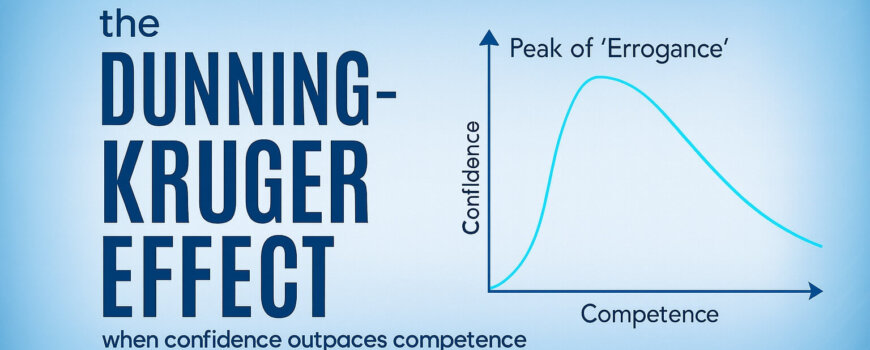
In clinical research, where accuracy, coordination, and compliance are non-negotiable, the greatest threat isn’t always a lack of knowledge. Sometimes, it’s the mistaken belief that we already understand more than we do. 

in Applied Clinical Trials

Volume 34, Issue 3: 06-01-2025

This cognitive bias, known as the illusion of knowledge, occurs when individuals overestimate their grasp of complex concepts or systems. In practice, it means investigators may feel confident in a trial protocol they’ve barely reviewed, or teams might assume timelines are realistic without accounting for common delays. The illusion is subtle but pervasive, and it quietly undermines decision-making, planning, and learning across all phases of a clinical trial. 

Recognizing and mitigating this bias isn’t just an academic exercise—it’s essential to avoiding costly missteps and ensuring study success.

Drawing insights from recent Applied Clinical Trials articles, here are critical examples of how the illusion of knowledge manifests in clinical research, along with strategies to mitigate its impact:

1. Underestimating Training Needs During Trial Startup

Manifestation of the Illusion:
In our most recent article, The Compounding Power of Training, we highlighted a common misbelief: that traditional ‘check the box’ training suffices for trial success. 

This overconfidence leads sponsors to underinvest in comprehensive training, assuming that site teams possess adequate knowledge from the outset. Such assumptions can often result in protocol deviations, recruitment challenges, and data inconsistencies.

Mitigation Strategy:

  • Engage in Explanatory Thinking: Encourage site teams to articulate their understanding of protocols and procedures. This practice reveals knowledge gaps and fosters deeper comprehension.
  • Foster Intellectual Humility: Cultivate a training and learning culture where acknowledging uncertainties is valued, prompting continuous learning and inquiry.

2. Overconfidence in Project Timelines Due to the Planning Fallacy

Manifestation of the Illusion:
In our article, Optimism’s Hidden Costs, we explored the “planning fallacy,” where teams underestimate the time and resources required for successful trial start-up activities. This overoptimism stems from an illusion of control and understanding, leading to unrealistic timelines and reactive crisis management when challenges arise.

Mitigation Strategy:

  • Encourage Curiosity and Dialogue: Promote open discussions about potential obstacles and uncertainties during planning and feasibility phases. This approach enables teams to develop more realistic timelines and contingency plans.
  • Foster Intellectual Humility: Recognize and accept the inherent uncertainties in clinical trials, allowing for more adaptable and resilient planning.

3. Preference for Passive Learning Over Effective Training Methods

Manifestation of the Illusion:
In our article, Rethinking Training, we emphasized that clinical trial staff often favor passive learning methods, believing them to be effective. This preference is yet another manifestation of the illusion of knowledge, where ease of learning is mistaken for actual understanding, leading to poor retention and application of critical information.

Mitigation Strategy:

  • Engage in Explanatory Thinking: Implement training that requires active participation, such as problem-solving exercises, compelling learners to process and apply information.
  • Foster Intellectual Humility: Educate planners and learners about the benefits of “desirable difficulties”—challenging learning experiences that enhance retention—to shift preferences toward more effective training methods.

4. Overconfidence in Training Completion

Manifestation of the Illusion:

In our article, Changing Behavior: Knowing Doesn’t Equal Doing, trial leaders often assume that once training is delivered, comprehension and performance will naturally follow. This illusion persists even when there’s little to no evidence that study teams truly understand the protocol or can apply it correctly under real-world conditions. Without measuring actual learning, sponsors are flying blind—confusing training completion with trial readiness.

Mitigation Strategy:

  • Measure What Matters: Completion doesn’t equal comprehension. Use behavioral measures to reveal understanding, surface confusion, and flag underperformance. Track how well learners retain and apply protocol-critical concepts—not just whether they finished the training. The more precisely you measure, the better your decisions.
  • Foster Intellectual Humility: Recognize that even experienced teams can misunderstand or misapply complex protocols. Make it standard practice to question assumptions, invite clarification, and validate understanding with real data. When you build systems that prioritize insight over assumption, readiness becomes measurable and actionable.

Ultimately, each of the strategies used to mitigate the illusion of knowledge—whether fostering intellectual humility, encouraging explanatory thinking, or measuring what matters—relies on one foundational commitment: investing in meaningful, evidence-informed training. Not training as a checkbox, but as a deliberate, ongoing process that surfaces false confidence, strengthens true understanding, and prepares teams for the complexity of real-world trials. 

When organizations prioritize training that challenges assumptions, encourages curiosity, and builds cognitive resilience, they do more than educate and check the compliance box—they avoid costly delays and increase trial quality. Recognizing and addressing the illusion of knowledge isn’t just good practice; it’s a critical safeguard for trial success.

Brian S. McGowan, PhD, FACEHP, is Chief Learning Officer and Co-Founder, ArcheMedX, Inc.

Can We Predict Trial Success? From ‘Feasibility’ to Predictive ‘Readiness’

What learning science has taught us about the drivers and predictors of change—and applying those to clinical research practice.

in Applied Clinical Trials

Volume 33, Issue 11: 11-01-2024

So much has been written about site feasibility over the past decade—even a cursory review of Applied Clinical Trials magazine, for instance, will identify ~20 articles, press releases, and interviews describing site feasibility services, solutions, toolkits, and best practices. And this is just a small snapshot of the “research” and promotion of site feasibility that overwhelms our community. With all that has been written and presented, it seems logical to ask if these site feasibility efforts have provided meaningful benefits.

Perhaps not surprisingly, current site and trial performance data provide a striking answer:

  • 70% of trials experience start-up delays
  • 80% of trials fail to meet on-time enrollment
  • 45% of trials miss original projected timelines

If the goal of site feasibility is to “predict” if a site will be successful in conducting a study and the performance data suggests that sites continue to struggle, then maybe it’s time to rethink our principle approach to predicting performance. To be clear, we need to continue to refine and enhance the predictive validity of site feasibility, but there are other evidence-based predictive measures of change that should be immediately used by clinical research professionals to minimize start-up delays, accelerate enrollment, and optimize trial performance.

In each of my prior columns, I’ve drawn lessons directly from cognitive science or behavior science to suggest new ways of approaching clinical trial planning and execution. For this column, I summarize what learning science has taught us about drivers, or predictors, of change—and how we get from learning to doing.

From learning to doing: Evidence-based predictors of performance

To summarize merely 50 years of evidence: learning science has demonstrated six characteristics of a learner in a training experience that are highly predictive of application of learning (i.e., behavior change). The more these characteristics are surfaced during a training experience, the more likely performance will improve. In other words, we know definitively that how and what a learner thinks while learning is actually our most accurate predictor of change. So what are these predictive characteristics?

1. Confidence (Self-efficacy)

Learner confidence, or self-efficacy, reflects the belief in one’s ability to execute specific tasks or behaviors. Bandura’s social cognitive theory emphasizes self-efficacy as a central predictor of behavior change, as individuals are more likely to implement new practices when they believe they can succeed. Clinical trial professionals with accurately placed confidence tend to be more proactive and persistent in applying their skills, which leads to sustained improvements in trial execution.

2. Reflection

Reflection involves the process of evaluating experiences and recognizing areas for improvement. Schön’s work on reflective practice underscores that reflective learners tend to bridge the gap between knowledge acquisition and practical application, as they continually integrate new insights into their professional identity. Reflection within training strengthens a clinician’s ability to adapt and apply new practices effectively.

3. Curiosity

Curiosity drives individuals to explore, seek out new information, and remain engaged. Curiosity has been linked to greater persistence in learning and problem-solving. In training, curiosity encourages clinicians to go beyond basic knowledge acquisition, leading to deeper assimilation and broader application of new skills.

4. Grit (resilience)

Duckworth’s research on grit—defined as perseverance and passion for long-term goals—demonstrates its role in achieving sustained behavior change, even under challenging conditions. Clinical research professionals with high levels of grit are better equipped to navigate difficulties and persist in adopting new behaviors. Demonstrating grit within trial training can, therefore, help professionals remain committed to change despite obstacles.

5. Intention to change (commitment to change)

Ajzen demonstrated that an individual’s intention to change is one of the strongest predictors of actual behavior change. Site training programs that encourage participants to set specific goals or commitments can foster stronger intentions to implement what they have learned. This behavioral intention often translates into meaningful change when clinicians return to practice.

6. Self-regulation

Self-regulation, the capacity to monitor and manage one’s learning process, plays a critical role in behavior change. Zimmerman showed that self-monitoring, self awareness, and strategic adjustments enable learners to incorporate new knowledge effectively. Site staff who are skilled in self-regulation are better able to apply new techniques consistently and refine their skills over time.

Importantly, these are characteristics of how and what a person thinks as they learn. In prior columns we highlighted the differences in “I-Frame” (the individual) vs “S-Frame” (the system) approaches to change management. Here is another example of just why the “I-Frame” is so critical—execution of a trial protocol ultimately comes down to an individual screening a patient, an individual providing care, and an individual deciding to diligently follow the varied and complex steps in a modern clinical protocol. Therefore, it is the individual or team’s readiness to perform that predicts trial success. And confidence, reflection, curiosity, grit, intention, and self-regulation are the well-established predictive drivers of readiness to perform.

Moving to feasibility plus predictive readiness

Site feasibility, as an “S-Frame” intervention, has a critical place in planning and conducting clinical trials, but it is simply not a strong predictor of trial success. The success of a study is more than having adequate logistics, resources, or experience—that’s not how performance works. To maximize our ability to predict trial success, we must consider the actual predictive drivers of behavior change. By focusing on these six training-based predictors, we can design training programs that not only convey knowledge but also foster lasting change. Ultimately, the purpose of trial start-up and site training is to empower professionals to act, transforming insights into better trial enrollment and execution, and accelerating advancements in patient care.

Brian S. McGowan, PhD, FACEHP, is Chief Learning Officer and Co-Founder, ArcheMedX, Inc.

From Outcomes to Insights: 4 Best Practices in Outcomes Storytelling

Take-away: Since there is no common agreement on what an “optimal” outcomes report entails, providers and supporters must recognize and embrace the flexibility and effort that is required to meet outcomes reporting expectations that wildly vary. This newsletter presents four best practices that simplify this effort, potentially saving the community thousands of hours and millions of dollars annually.

As a result of our initial “Future of Outcomes” outreach in late July, we have had more than 40 discussions with supporters and providers. While many discussions began by simply reviewing the general take-aways from our White Paper, subsequently we have been asked to dig a bit deeper into reviewing confidence-based assessment outcomes, behavioral engagement data, and readiness to change measures from specific projects, clinical areas, and even complete provider programs. These practical discussions reveal two things: 1) the community of providers and supporters are collectively starving for more effective ways to tell their outcomes story, and 2) we are far from having common reporting expectations which, as a result, continues to create significant tension and frustration across the community.

The Varied Range of Outcomes Report

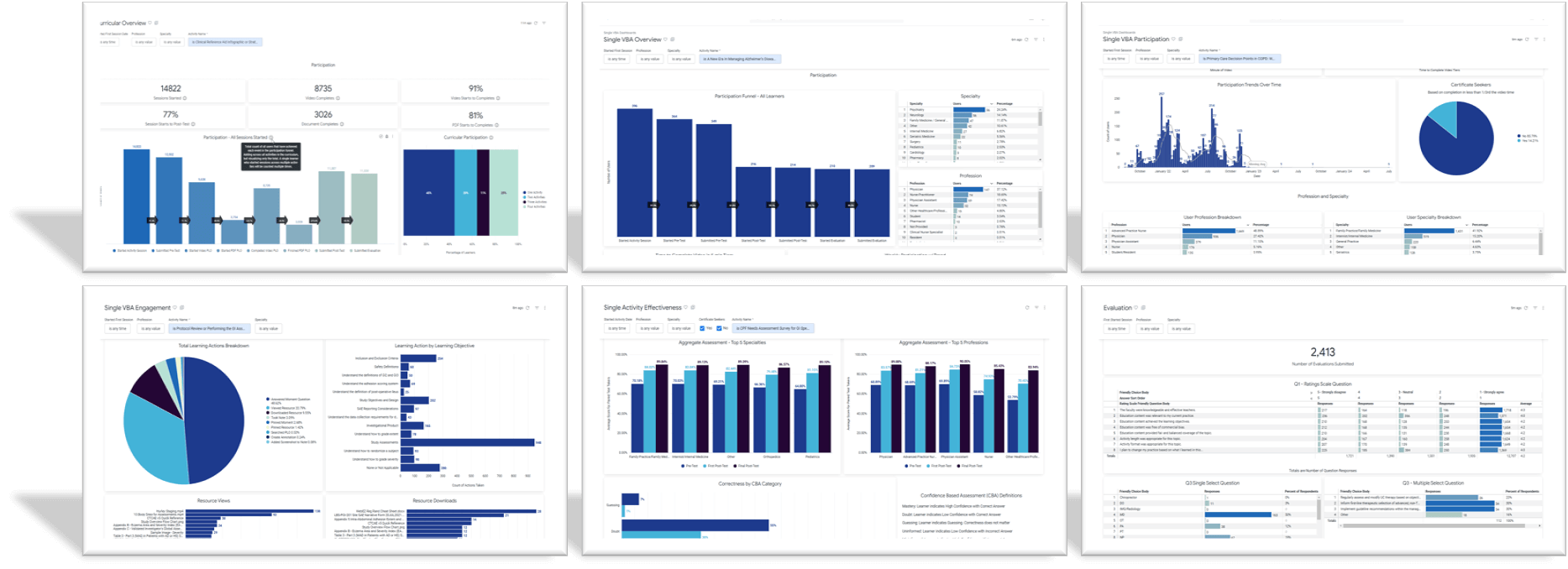
For nearly 12 years ArcheMedX has provided our partners with real-time, 24-hour access to up to six different, intentionally designed Ready outcomes dashboard. These dashboards include hundreds of data visualization and granular data tables each designed to simplify outcomes efforts. All data, analyses, and visualizations are aligned with the Outcomes Standardization Project, but they include much, much more. Between the visualizations and the granular data table there are few, if any, outcomes-related questions that can not be answered. And all dashboards are filterable by user Profession, Specialty, and date. There is literally nothing like it in CME/CPD.

But having access to this treasure trove of data is just the beginning. Once the data is generated and the dashboards are consumed its ‘Reporting” time…and this is where things can often seem paralyzing. Does the data need to be entered manually into a grants management system, does it need to be summarized into a single-slide template, does a narrative report need to meet a strict page limit before being uploaded, can it be presented in person, how about interpretive dance….🕺💃

Now rinse-and-repeat for every project, for every supporter, every milestone, month, or quarter. If you ask a dozen supporters how (and when) they ‘require’ outcomes reports you will get two dozen answers. Go ahead and try it, I did 😉

Best Practices in Outcomes Report

Over the past few years, we have worked hard with providers and supporters to find the most common ground. This work has led to the creation of outcomes reporting best practices which come directly from the providers who have had the most success and the supporters who are most satisfied. The best practices won’t be a miracle cure 100% of the time, but they’ll ensure a core reporting structure that can then be efficiently altered as needed.

#1 – Begin with the most complete data model and experience you can engineer. Obviously this is a strength for us at ArcheMedX, but the more robust your data model is, the more seeds you have from which to sow your outcomes story. Invest upfront in the model and you’ll reap the benefits many times over!

#2 – Ensure that your core outcomes methods, measures, and analyses are clearly articulated in your planning and proposals. For every educational intervention there are literally 1000s of questions that could be asked of the data after the fact – but good outcomes science happens within a predefined and structured framework. I spend as much time in data tables as anyone I know – trust me: you have to plan, focus, and ruthlessly prioritize. 

#3 – Create a holistic reporting framework that effectively communicates not only your outcomes data, but also your insights (what does it mean?). At this point your core outcomes methods, measures, and analyses should be your guide. Sure, lean into the Outcomes Conceptual Framework (Moore 2009), but also recognize its limitations. Your reporting framework should be principally driven by what you intended to measure and what unique methods and analyses you leveraged.

#4 – Remember the adage, “Contrast creates meaning.” The best insights never come from purely descriptive outcomes, but from how these outcomes compare or contrast to other datasets. Leveraging things like segmentation, effect size, or benchmarking data, routinely spark the most meaningful insights.

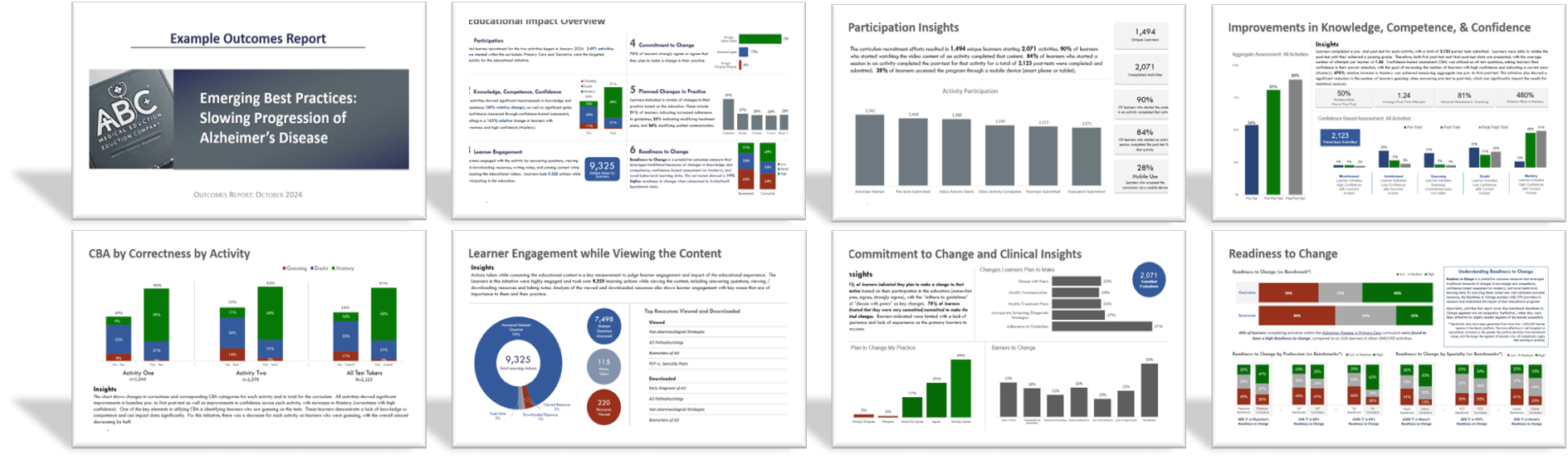
Here is a snapshot of how we recommend our partners bridge the chasm from data to storytelling – this is our Ready Reporting Template – our holistic reporting framework. It’s a nearly perfect balance of simplicity, rigor, and most importantly, storytelling. Eight-to-ten slides, each self-contained, with simple design, and a balance of data and narrative. (And for the visual design nerds, each slide averages nearly 80% white space!)


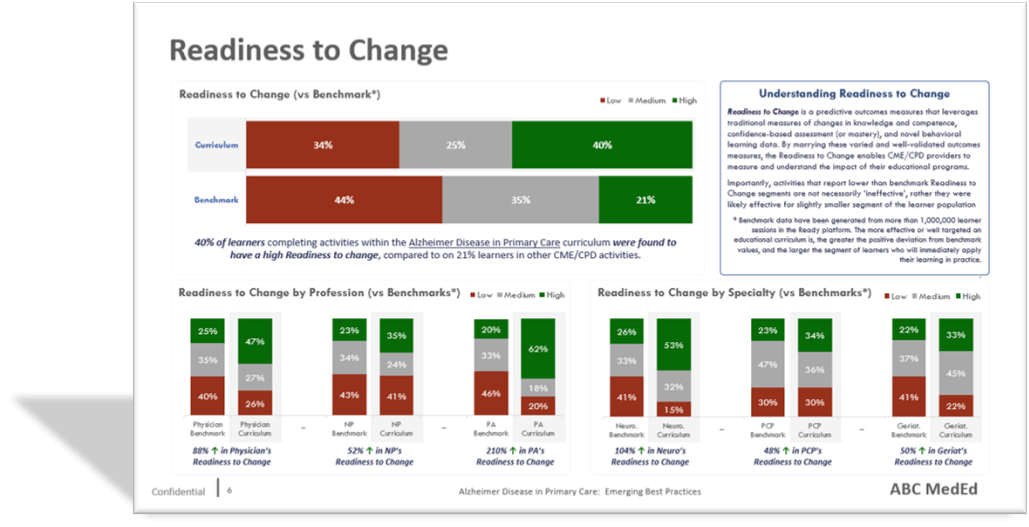
More specifically, as an example of just one element of the Ready Reporting Template, here is our new Readiness to Change ‘report’ slide:


Upper right: brief narrative explaining the methods and measures.
Upper left: comparison of aggregate Readiness to Change outcomes vs historic benchmarks.
Bottom left: comparison of Readiness to Change for the top three intended professions.
Bottom right: comparison of Readiness to Change for the top three intended specialties.
Notice that each of the three data visualizations is supported with the most relevant insight. 

——- | ——-

After 20+ years of pioneering approaches to outcomes science and reporting, both as a supporter and a provider, I’ve come to the conclusion that there is far too much complexity and variability for the community to ever truly standardize a reporting approach. We CAN standardize methods and measures, but NOT the way we tell our stories. My goal is that by sharing these outcomes reporting best practices and our example Ready Reporting Template, we collectively move closer and closer to a viable common ground.

As always, please let me know if you have any questions about the reporting best practices or the Ready reporting template. If you want to chat directly, click this calendar link to find an open time that fits your schedule.

Continue Reading