The earliest signs of trial risk may appear before the first patient is ever enrolled.
Training completion tells you who finished. It does not necessarily tell you who is prepared to execute the protocol.
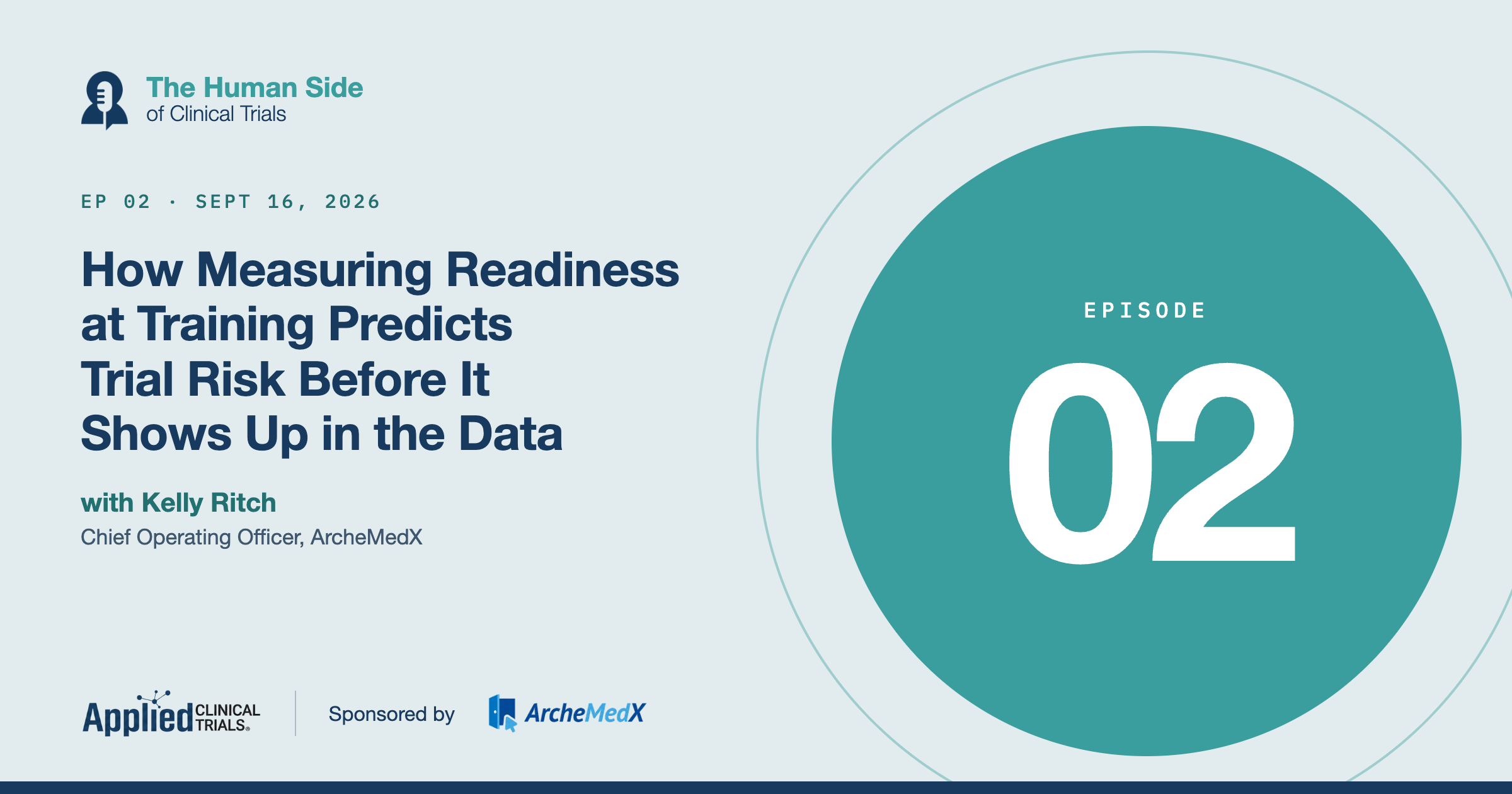
In the second episode of The Human Side of Clinical Trials, Brian S. McGowan, PhD, FACEHP, chief learning officer and co-founder of ArcheMedX, is joined by Kelly Ritch, MS, MBA, chief operating officer of ArcheMedX, to explore how measuring both competence and confidence can uncover risks that traditional assessments often miss.
They examine why recognizing uncertainty matters, how confidently held misconceptions can create hidden execution risk, and how earlier signals can help sponsors and CROs target coaching, clarification or oversight before gaps surface as protocol deviations or other operational problems.
What evidence tells you a site or study team is truly ready before the first participant is enrolled?
You can listen, share, and subscribe to the podcast here:
Related Post
Introducing The Human Side of Clinical Trials
A new conversation about clinical trial performance starts here. Published by Applied Clinical Trials and…

ArcheMedX Team
AI Will Not Close the Readiness Gap in Clinical Trials. It Will Expose It.
The risk in an AI-first trial is not that teams use the tools. It is…

Joel Selzer
The Earliest Warning Sign: How Measuring Readiness at Training Predicts Trial Risk Before It Shows Up in the Data
Most protocol deviations start as human problems, not operational ones, but risk-based monitoring typically relies…